In summary, while diseases remain a significant challenge, they also catalyze the livestock sector to restructure toward higher safety standards and stronger resistance to biological shocks. Continued progress in veterinary science and increasing awareness of biosecurity will be key to ensuring the long-term stability and development of the global livestock industry.
Global Policies, Market Dynamics, and Future Trends in Livestock Farming
The modern context reveals a strong interconnection between the livestock sector, global policy changes, and evolving market trends. International trade in livestock products is increasingly vibrant but volatile in response to policy shifts.
Trade Policies and Market Access
Free trade agreements (FTAs) open significant opportunities for livestock exports, including meat, milk, and eggs. For instance, CPTPP and EVFTA allow countries such as Vietnam, Australia, and New Zealand to access deeper European and Asian markets with preferential tariffs on meat and dairy products.
However, these benefits come with stringent food safety and quality standards requirements. Importing countries demand traceability, veterinary hygiene standards, and antibiotic and hormone residue limits. As such, livestock producers must comply with Good Animal Husbandry Practices (GAHP), ensure animal welfare, and maintain disease-free status to qualify for these high-value markets.
Geopolitical Instability and Supply Chain Risks
Geopolitical tensions also impact the livestock sector. For example, the recent U.S.-–China trade war led to reduced imports of American agricultural goods, prompting China to shift to suppliers like Brazil and others—affecting global prices of soybean (a key livestock feed) and meat.
Global conflicts and pandemics, such as COVID-19, have exposed vulnerabilities in the international supply chain. Border closures and logistical disruptions during the pandemic led to temporary meat shortages. They emphasized the need to diversify supply sources.
Agricultural Subsidies and Feed Supply
In developed countries, significant government subsidies and price stabilization funds give domestic farmers a competitive edge—often undercutting livestock producers in importing countries. On the other hand, some developing countries limit the export of feed ingredients (like corn and wheat) during poor harvests, which can drive up global feed prices and burden farms reliant on imports.
Shifting Consumer Preferences
Global consumer preferences are also evolving, reshaping the livestock industry’s direction. Modern consumers are no longer solely focused on price and taste—they are increasingly interested in sustainability and ethics. The “clean eating, green living” trend has driven demand for organic meat, products from farms with high animal welfare standards, and rejecting inhumane practices (e.g., force-feeding for foie gras battery-caged eggs).
To address this, many companies are committing to improving animal welfare—for example, phasing out battery cages for laying hens or banning pig castration without anesthesia. Major retailers in Europe and the U.S. are creating animal welfare standards that suppliers must meet to place their products on store shelves.
Global Climate and Sustainability Policies
Global climate and sustainability policies also indirectly shape the livestock sector. Under the Paris Agreement, many countries are developing plans to reduce agricultural greenhouse gas emissions, mainly from livestock.
The Global Methane Pledge aims to cut methane emissions by 30% by 2030, setting ambitious targets for dairy and beef cattle systems to adopt improved practices. The United Nations Sustainable Development Goals (SDGs)—especially SDG 2 (Zero Hunger) and SDG 13 (Climate Action)—are guiding investments in technical support for smallholder farmers to boost productivity while protecting natural resources.
In summary, today’s global policy and market environment require the livestock industry to adapt flexibly. Those who embrace high standards, seize opportunities from integration and proactively navigate challenges (e.g., disease, geopolitical instability, climate change) will retain their competitive edge. Conversely, those slow to adapt risk losing domestic and international market share shortly.
Emerging Trends in the Next Five Years (2025–2030)
Looking ahead to 2025–2030, the global livestock sector is expected to undergo significant transformations in response to emerging demands and challenges. Below are several key trends forecasted to shape the future of livestock:
1. Emphasis on Green Technology in Livestock
Green technology will be heavily applied to reduce the environmental impact of livestock farming. A significant focus will be cutting greenhouse gas emissions, mainly methane from ruminants (cattle and sheep).
Ongoing research into feed additives like Asparagopsis red seaweed or 3-NOP compounds shows promise in cutting methane emissions by 20–30%. In the next five years, these additives will likely be commercialized at scale, supported by carbon credit incentives or financial aid for farmers adopting clean technologies.
Renewable and circular energy will also become mainstream on large-scale farms. Solar panel systems installed on barn rooftops and biogas digesters that convert animal waste into electricity and organic fertilizer are already being adopted and will expand further. These not only reduce energy costs and pollution but can also generate extra income by selling surplus electricity.
Waste management and resource conservation will also be more emphasized than ever. New regulations in many countries require large farms to have wastewater treatment systems that meet environmental standards. Technologies to turn livestock waste into organic biofertilizer or recycled materials (e.g., animal hair, bones, horns in household goods) will continue to develop.
Planting green buffers and forests around farms to absorb odours and emissions while improving the landscape and biodiversity will also become common, especially within regenerative agriculture models.
In short, low-emission livestock production will shift from a slogan to a practical requirement in the years ahead. Countries and enterprises that lead in green innovation will gain a competitive advantage as more consumers and partners seek low-carbon products.
2. Moving Toward Sustainable and Ethical Livestock Practices
Sustainable livestock farming is an inevitable trend as the industry seeks to address rising food demand, protect the environment, and maintain long-term livelihoods for farmers. In the next five years, the concept of sustainability will be realized in several dimensions:
Economically, “sustainable intensification” will be promoted—meaning more output per animal or hectare, without proportional increases in resource inputs. This is achieved through better breeds, better management, and better technology.
Environmentally, sustainable livestock includes biodiversity conservation. Agroforestry systems and integrated livestock-crop models will thrive, especially in tropical areas. Models like VAC (Garden–Pond–Livestock) or silvopasture (trees + grazing) create diverse ecosystems, optimize land use, and provide natural shade for animals. Well-managed pastures can sequester carbon in the soil while serving as habitats for wildlife.
Socially, sustainability means not leaving small-scale farmers behind. Many development projects will help them access technology and markets. Livestock cooperatives and value chain linkages will help ensure fair benefits and protect farmers from being marginalized in the global supply chain.
Higher standards will be emphasized for animal welfare. Many countries are set to ban or restrict controversial practices such as sow confinement crates, beak trimming, or pig castration without anesthesia. Friendly farming methods like free-range systems and organic livestock production will be encouraged. Research also shows that animals with higher welfare levels produce better quality meat and milk and are less disease-prone.
3. Accelerated Digital Transformation and Automation
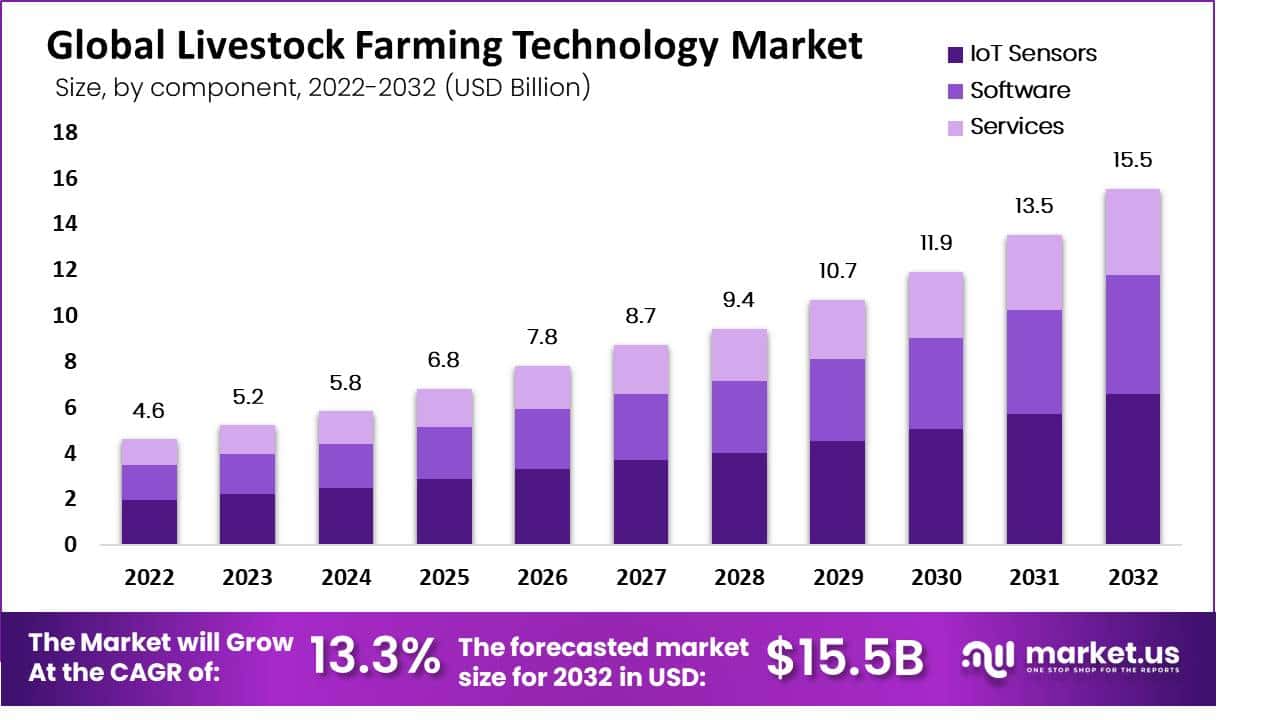
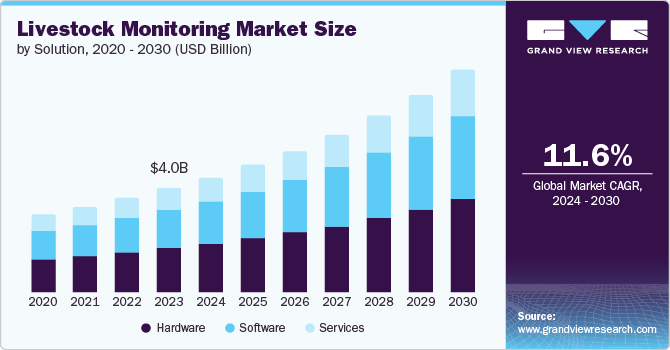
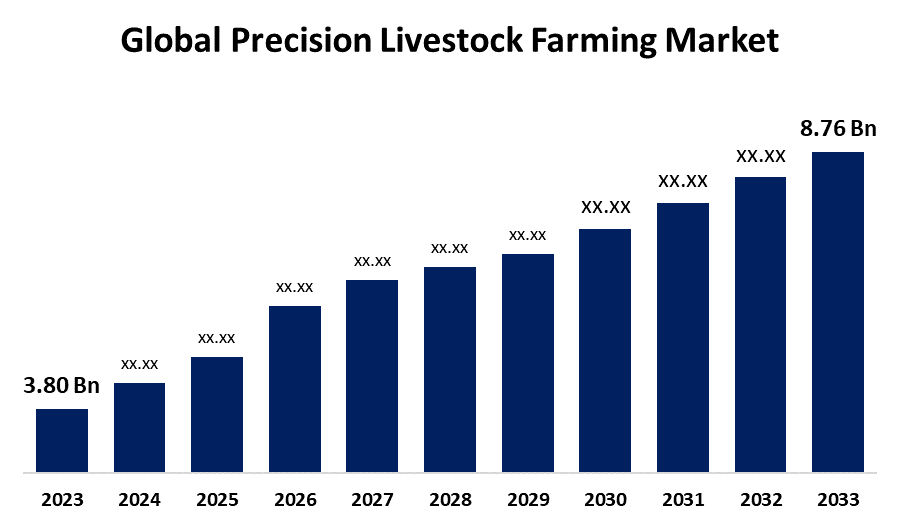
As mentioned earlier, digital transformation in livestock has already begun and will accelerate significantly. The global innovative livestock monitoring market is projected to grow to USD 2.57 billion by 2031, up from USD 1.65 billion in 2025, at a CAGR of ~7.7%. This means more farms will install digital systems to manage their herds.
Integrated farm management platforms will allow farmers to track animal growth, feed inventory, vaccination schedules, and market prices—all from a smartphone or computer.
Predictive analytics will help forecast optimal slaughter times and market demand, enabling producers to adjust herd sizes proactively.
Falling prices of sensors, RFID chips, and AI cameras will make these technologies accessible even to small- and medium-sized farms.
AI and machine learning will support decision-making—e.g., analyzing animal behaviour via video to detect early signs of illness or injury.
Companies like Cainthus have developed AI camera systems that monitor dairy cows individually, tracking their health and feeding behaviour. In the future, virtual assistants for farms may emerge—where farmers ask questions via voice and receive AI-driven guidance on animal care and feed plans.
Blockchain could be used to trace livestock product origins, providing transparent trust for consumers. Scanning a QR code on a meat package could reveal the animal’s origin, feed regimen, and slaughter process.
Robotics will increasingly replace human labour in repetitive or heavy tasks. For example, robots with cameras can autonomously patrol barns, clean stalls, or use drones to monitor livestock on large pastures or disinfect facilities.
The challenge will be training farmers to adopt and use these digital tools effectively. Over the next five years, many training and technology transfer programs will be rolled out to bridge the digital divide across regions and farm sizes.
Agritech startups in Vietnam and globally will have great potential to attract investment and offer innovative digital solutions to the livestock sector.
In short, digital transformation will no longer be optional but a strategic imperative for the livestock industry to stay competitive and future-ready.
4. Expanding Export Markets and Changing Consumer Demand
In the next five years, international trade in livestock products will continue growing—especially toward emerging markets. Consumption of animal-based foods will rise rapidly in developing countries due to young populations and rising incomes.
For instance, as per capita income increases so does per capita meat consumption in Asia and Africa. By 2030, meat consumption in Asia alone is forecast to increase by over 33% and by 2050 by 78% compared to current levels. This means substantial export opportunities for producing countries that can meet both quantity and quality requirements.
Traditional exporters like Brazil, the U.S., the EU, and Australia will continue to dominate the global beef, poultry, and pork supply. However, we’re seeing the rise of new players in Asia:
India has emerged as a major exporter of carabeef (buffalo meat) to Southeast Asia and the Middle East.
Thailand is a long-established exporter of processed chicken to Japan and the EU.
Vietnam is setting its sights on deeper integration into the global meat supply chain, starting with pork and poultry exports to neighbouring countries. To do so, the government is working to improve disease control and processing quality.
Moreover, the strategy isn’t just to export raw livestock products and value-added goods and services such as high-quality breeding stock, bull semen, embryos, animal feed, and veterinary medicines.
Vietnamese animal medicines Exporters are increasingly recognized in international markets, with products reaching dozens of countries. Shortly, Vietnam could become a hub for Veterinary medicine manufacturing in the region, supplying vaccines and veterinary drugs for domestic needs and neighbouring livestock markets. This would open up new export revenues and elevate Vietnam’s veterinary sector on the global map.
At the same time, consumer preferences for livestock products are evolving. Today’s consumers focus more on nutritional quality (e.g., lean meat, low-fat milk) and specialty items (e.g., organic beef, Omega-3 eggs, indigenous free-range breeds). In the coming years, premium segments with clear traceability will expand, especially among Asia’s growing middle class.
Conversely, red meat consumption (beef, pork) in some developed countries may level off or decline slightly due to health trends and dietary shifts—but this will be offset by growing demand in developing countries. Seafood and poultry are expected to grow faster globally and are seen as healthier and more economical protein sources.
Finally, the livestock sector must contend with the rise of alternative proteins, particularly among younger urban consumers. While still a tiny market, plant-based meat and dairy grow at double-digit rates annually. Some startups even aim to bring cultured meat to the mass market in the next few years. This trend pushes traditional livestock producers to continuously improve product image (cleaner, greener) to retain consumer loyalty.
The global livestock industry is entering a transformative phase in the modern era. Its vast scale and indispensable role in global food security are precise. Still, the industry also faces bottlenecks in areas like the environment and disease control.
Climate change, technology, health crises, and policy shifts demand that livestock producers adapt flexibly and grow sustainably. In the next five years, we can expect a new face of livestock farming—greener, cleaner, brighter, and more integrated with global markets.
Achieving this will meet rising food demands and contribute to shared sustainability goals. Livestock will remain a pillar of agriculture, but only if stakeholders—from farmers and businesses to governments and global organizations—act together to build a more efficient, sustainable, and responsible livestock sector for the future.